
Douglasville Previous Residents by Era
No single roll names every person tied to a Douglasville address. The current parcel card supplies the stable starting facts: parcel identification number, legal description, subdivision or lot, and the latest deed clues. Recorded deeds then document legal owners. Census schedules and a verified directory volume may name household members, while permits and historic maps describe the site itself. Use the source that fits the date and the question.
| Source | Years It Covers | Where Held | What It Shows |
|---|---|---|---|
| Clerk real-estate originals | 1871 to present | Douglas County courthouse | Ownership and encumbrance chain |
| GSCCCA index | At least 1999 to present | Online statewide index | Parties, property, book and page, image status |
| Sanborn maps | 1895, 1900, 1905, 1911, 1923 | Library of Congress and DLG | Street and structure changes, not occupants |
| Federal census | 1880 and 1900 to 1950 | NARA and library databases | Household snapshots at ten-year points |
| City directory title | Exact local run unverified | FamilySearch catalog and local inquiry | Name, address, and occupation if a volume exists |
| City permit reports | 2022 through July 2026 verified | Douglasville monthly PDFs | Address, project, permit, and applicant clues |
For a recent trail, start with Douglas County QPublic and the deed index. For a turn-of-the-century building, align the legal description with maps and census pages. Do not assign years to a Douglasville criss-cross collection until library staff confirms the physical run.
Start a Douglasville Past Residents Trail
Search the situs address in QPublic before guessing at an old name. Situs means the physical location of the parcel; the mailing address is where tax notices go. Copy the PIN, full legal description, land lot or district, subdivision and lot, current owner, deed date, and any book and page. Those fields keep the chain attached to the land when names repeat.
A matching mailing and situs address plus a homestead field can support an owner-occupancy inference. It still does not identify every person in the household. A different mailing address may point to an absentee owner, an estate, a company, or an association. None proves who slept at the site.
Note: A parcel owner is evidence of title, not a complete list of previous residents.
Walk Douglasville Past Residents Through Deeds
The GSCCCA real-estate index supports party and instrument searches. A grantor gives an interest; a grantee receives it. The safest backward method turns each seller into the buyer in the next older search and checks the legal description at every handoff.
- Copy the current owner, deed date, PIN, and legal description from the parcel card.
- Select Douglas County and search that owner as grantee near the deed date.
- Open the matching conveyance and record the grantor, dates, book, page, instrument type, and prior-deed recital.
- Search the grantor as an earlier grantee. Resolve spelling variants, estates, trusts, and entity transfers.
- When the web trail ends, use direct and indirect deed books at the clerk counter or ask Georgia Archives about county microfilm.
- Grantor and grantee
- The grantor transfers an interest; the grantee receives it.
- Chain of title
- The linked series of transfers for the same land.
- Legal description
- Land-lot, district, subdivision, lot, or boundary wording that follows the parcel despite address changes.
An index entry is a finding aid, not the deed itself. It may show county, parties and roles, instrument type, recorded date, book, page, instrument number, description, and whether an image is available. Images can require an account or payment. Official proof comes from the Douglas County Clerk of Superior and State Courts.
Douglasville Previous Residents Before 1999
Statewide online coverage is safely documented from January 1, 1999. Douglas County clerk originals begin in 1871. That difference matters: the end of a web result is not the start of the parcel. Earlier links may sit in the clerk's direct index under the seller, the indirect index under the buyer, or in deed books at the courthouse.
The Douglas County Clerk keeps the real-estate originals at 8700 Hospital Drive and provides the physical fallback. Georgia Archives county microfilm is principally useful for older material, but its Douglas County cards must be checked for an exact series. Copy and certification costs vary, so request a current quote.
Note: Search both party roles and preserve book-page citations before moving from an index to the courthouse copy.
Map Douglasville Past Residents Carefully
The verified Douglasville Sanborn sequence has sheets from 1895, 1900, 1905, 1911, and 1923. These fire-insurance maps can show a building footprint, construction material, use, outbuildings, street labels, numbers, and changes between editions. They do not name the previous residents.
Search the Douglasville Sanborn maps by the period street, then compare the shape and position with the parcel's legal description. Follow that structural evidence with a census, tax digest, deed, or confirmed directory entry. A building that changes use can explain why a person disappears from an address without proving where that person went.
Georgia Archives and Douglasville Past Residents
The Georgia Archives catalog and research room are the next stop for county cards, older deed or tax microfilm, probate volumes, and statewide vital indexes described in the catalog. The source screen below is the successful capture assigned to Douglasville previous-resident research.
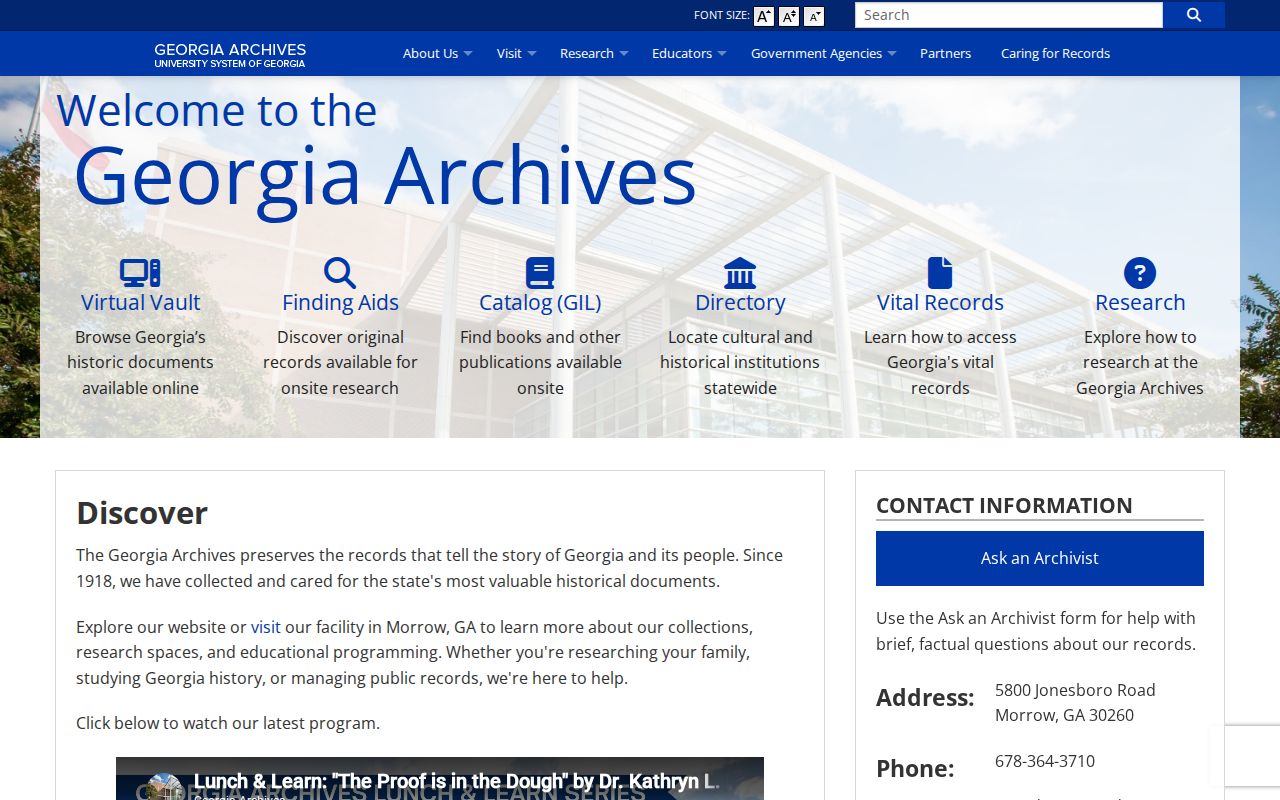
Use the catalog citation to ask for the exact county, record group, volume, and date. County microfilm coverage varies, so the catalog or staff response should control the claim.
Douglasville Previous Residents and Bankhead
Douglas County records say GIS and E-911 completed a Bankhead Highway/U.S. 78 readdressing, but the official source does not give an exact completion year. A new street number can therefore look like a household move when the same land and building stayed put.
Bridge the gap with the parcel's address aliases, PIN, legal description, historic permits, and Sanborn alignment. Search both the old and new road forms. Never join two addresses just because the owner names resemble one another; the parcel facts must match.
Douglasville Previous Residents at the Courthouse
Douglas County was created in 1870 from parts of Cobb, Campbell, and Carroll counties, and local clerk custody begins in 1871. Research before that boundary date follows the land into the parent county that held it then. Douglasville became the county seat before its 1875 incorporation, so courthouse records remain central to an old address trail.
The courthouse story has several turns: a brick clock-tower courthouse was completed in 1896, a courthouse burned on January 11, 1956, a replacement followed in 1956-57, and the current government complex opened in February 1998. The old building became museum and Historical Society space. Disaster references conflict on other dates, so the fire alone does not prove that a particular volume was lost.
Directory Leads Need Local Proof
Georgia Public Library Service describes its digitized city-directory project, shown in the successful capture below. The named online communities include several nearby Cobb County places, but not Douglasville.
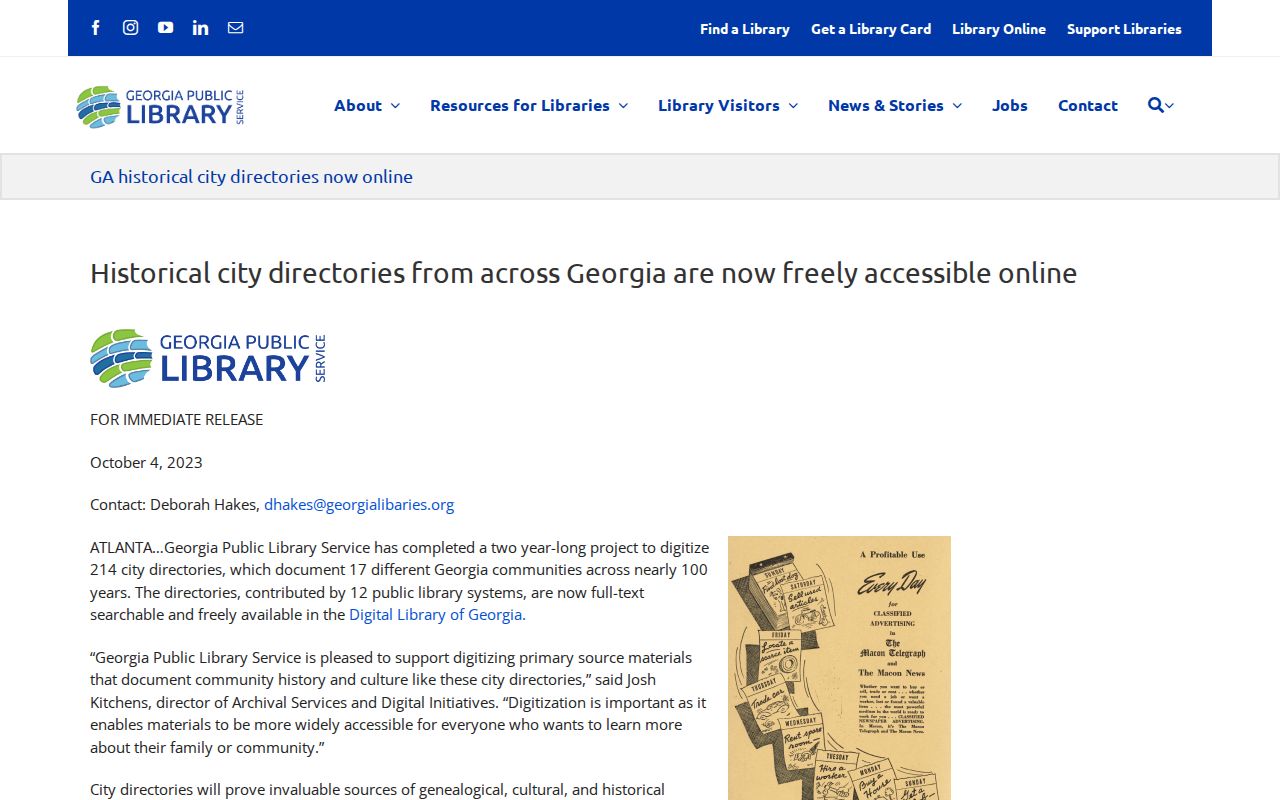
A FamilySearch catalog title for a Douglasville city directory is verified, yet its publisher and year run were not exposed. Ask Douglas County Library Special Collections or the museum before citing a volume. The full collection question belongs on the Douglasville city directory page.
Confirm Douglasville Past Households
Previous residents include people who never held title. Federal census schedules offer public Douglas County household snapshots for 1880 and 1900 through 1950; the 1890 census was largely destroyed. A city or telephone directory may fill years between census schedules, but only after the local volume and year are confirmed.
- Find the address or surname in a verified directory year and copy the entry exactly.
- Compare the year before and after, allowing for canvass dates and a missed household.
- Match the nearest public census by names, ages, kinship, and street context.
- Check the deed and tax trail to separate occupants from owners.
- Use newspapers, obituaries, and probate to explain a death, estate transfer, or departure.
The Georgia Historic Newspapers portal includes the Douglas County Sentinel from January 1917 through December 1922. Probate Court keeps estates and wills; call 770-920-7249 for access and current copy terms. An obituary is a lead, while the probate file can identify an estate representative or heirs.
Lawful use. Research previous residents for family history, estate work, or property history. Never use an address trail to stalk, harass, or track a living person.
Vital Records Close a Douglasville Trail
Death indexes and certificates can confirm the end of a life, but access differs from a newspaper search. Georgia death certificates from 1919 through 1943, with some 1914 through 1918 material, appear through Georgia Archives and FamilySearch. Certified copies remain subject to entitlement and identification rules.
The Georgia State Office of Vital Records page shown below explains the state program and directs requesters to official channels.

For a local question, Douglas County Probate Court is the contact for death, marriage, estate, and related routing. Do not infer a death or family relationship from a vanished directory entry alone.